Showing posts with label Book Review. Show all posts

Thursday, August 22, 2024

Book Review - Set Apart - Genesis Stands Alone


Book Review

Set Apart

How Genesis Stands Alone

What makes the creation account in Genesis different from other ancient Near Eastern (ANE) creation stories?  Is it just mytho-history that converges with other creation accounts, thus reflecting the shared worldview of an ancient Near East person, or is it something more?

In Set Apart, How Genesis Stands Alone, J.R. Miller makes the case that not only is Genesis unique among all other ANE origin stories, it is actually theo-history.  As such, it does not merely serve the purpose of explaining our spiritual origins, but is also a true history of our material origins.  It is more than just literary symbolism with no relationship to real history or the physical reality of our world.  One example of this is God's actual creation ex nihilo of the universe, not from pre-existing materials.  In other words, IRL, the universe actually had a beginning and was created by nothing more than God's divine command.

A competing viewpoint, to which this book is a counterpoint, is the idea that Genesis is just mytho-history with more in common with ANE mythologies than a straightforward historical narrative, thought it may still have some truth embedded within it.  This viewpoint argues for a convergent worldview between the author of Genesis and other ANE creation myths.  Its purpose was more to teach important religious truths and practices, in much the same way as other cultures did too.  While it was inspired writing, it did not concern itself with strict historical accuracy.

Miller argues that Genesis, while sharing literary similarities to ANE myths, is actually theo-history.  This is the view that Genesis presents a worldview that is divergent from the surrounding nations, and that it tells of actual historical events, places, and people, as divinely revealed from the one self-existent Creator God.  As such, it is a dependable foundation upon which to ground our understanding of the material world.   

Genesis stands apart for its:
  • Monotheism, One God who is ontologically distinct from His creation
  • Linear view of history, which is advancing according to His eternal plan
  • Contingent creation from nothing by God's Word (ex nihilo), using the Hebrew word bara in several places when something new came into existence
  • View that humans were uniquely created in God's image and have intrinsic value and worth
  • Claim that the Creation was originally created as good and serves as His General Revelation to all peoples
  • Telling of the True Myth, as C.S. Lewis once noted
  • Sometimes poetic and figurative language usage to describe actual history
  • Grounding of ethics and morals as revelation from God
Miller states, "creation is contingency, not theogony".  It depends on God's will, and was not derived from a battle of the gods and their cycle of birth, death, victories, and defeats.  Genesis does not conflate aspects of the material world as embodiments of various gods, but rather as a good creation under His full control.  Chaos and conflicts among the gods is non-existent in Genesis.  So nor is it a theomachy, which attempts to explain a hierarchy of power for both deities and kings.  

Clearly Genesis (or scripture as a whole) was not intended to be a scientific textbook, but it also stands as one of two books of Revelation from God, which are the Book of Nature and the Book of scripture (sometimes called General and Special Revelation).  Since God is the author of both, they cannot contradict each other.  We can improperly understand one or both, but we should expect a moderate concordance between them (sometimes referred to as soft concordism).  True humility is required of the theologian, the scientist, and the rest of humanity, as we are all fallible.

As such, the Bible gives us reason to trust it as a starting point for understanding the world around us.  Hugh Ross, the founder of Reasons to Believe, is quoted, "moderate concordism does not change the meaning of the biblical text, but allows science to shape our understanding of the text."  Miller points out that, likewise, the Bible can help correct misunderstood aspects of the record of nature.  Rather than science and faith being at odds, this allows for an open dialog on a scientifically testable creation model, instead of conflict between naturalism and belief in a Creator.

Yes, Genesis does stand apart as unique among ANE religious texts.  As a true special revelation from the Creator, it: 
  • is written as a historical narrative, using literal, poetic, and figurative language as needed
  • is theo-history, not mytho-history
  • presents a distinct linear Hebrew cosmology and origin story
  • is Monotheistic, unlike the surrounding cultures
  • describes a contingent material world, created by God's command
Just like our God, it is one of a kind!  

Thursday, November 12, 2020

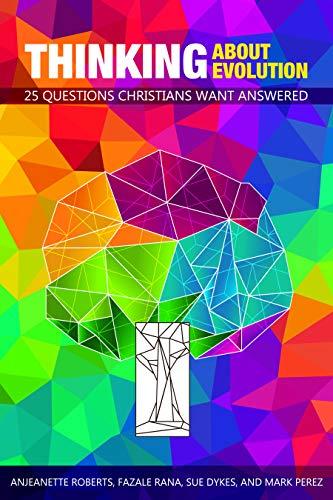
Book Review - Thinking About Evolution


Thinking About Evolution: 25 questions Christians want answered
By AJ Roberts, Fuz Rana, Sue Dykes, and Mark Perez


The multidisciplinary team of authors brings clarity on exactly what evolution is, and what it is not. They examine which aspects of evolution are on sound footing, and where there are legitimate grounds to be skeptical of the evolutionary paradigm. With expertise in molecular biology, biochemistry, paleoanthropology, Christian apologetics, and analytical philosophy, they present a creation model view of interpreting the evidence, comparing and contrasting the scope and explanatory power of this model to current evolutionary models of the origin and development of life on the earth.


I appreciate that the book starts out with a clear definition of Old-Earth Creationism (OEC), sometimes called Progressive Creationism, as clarity is always valuable and helps to head off misunderstandings and straw man arguments.  Reasons to Believe's (RTB) insistence on harmony between Creation and Scripture, or Science and Faith, is biblical and warranted.  It reflects the Creator's character and his revelation to humanity.  

The book includes enough detail on the various subjects to highlight the salient issues at play.  The authors appear to be fair in their evaluation of the strengths and weaknesses of the various topics.  While they are overall skeptical of the ability of evolution to account for the full diversity and history of life on Earth, they provide balanced expert analysis based on their research experience and training.  

The authors put forth a very important observation: that data, and even science itself, explains nothing, but that it is scientists who explain things!  These explanations are based on interpretations of the evidence, prior knowledge and observations, worldviews and presuppositions, and even the nature of reality.  While facts are things that are true, it may not always be possible to demonstrate with certainty that something is true, even if it is.  Theories and scientific paradigms are put forward by scientists to explain the data and are meant to be tested.  However, it is a dangerous thing to protect certain ideas from being challenged freely (e.g. the modern Theory of Evolution), even if widely accepted.  There is a trend in our society to silence dissent instead of promoting open discussion and not tolerate disagreement.

Another takeaway from the book was that it is critical to define terms like "evolution", "information", or "transitional forms."  For instance, there are several different kinds of naturalistic evolution, each with different levels of empirical support and each based on differing levels of inference.  These include chemical evolution, microevolution, microbial evolution, speciation, and macroevolution.  It is a mistake to conflate the different definitions and then make blanket statements about the truth or falsehood of the subject.

The question/answer format is very useful, as it encourages its use as a reference for those seeking thoughtful answers.  It lends itself readily for small group discussions, as well.  While each topic could easily take up several chapters, the pertinent content is provided, objections are addressed, and references are included for further study.

A valuable side panel in the book discussed different types of reasoning.  These include deductive, inductive, abductive, and defeasible reasoning, and the levels of certainty that we can get from each type. The latter two types may not be as familiar.  Abductive reasoning, also known as inference to the best explanation, is often used by researchers or detectives during investigations.  Defeasible reasoning, or belief revision, is used to amend conclusions, models, explanations, or beliefs when new evidence is given.  

The authors make the point that while most scientists today accept evolution, they still have disagreements over the underlying mechanisms proposed.  In this context, they provide an interesting quote by Thomas Huxley, “In matters of the intellect do not pretend that conclusions are certain which are not demonstrated or demonstrable."  Huxley disagreed strongly with Darwin on the mechanisms, but still supported the concepts.  

One important question asked in the book, "Is such bulldogged tenacity in clinging to evolution due to the science or to something else?"   I think it is fair to conclude that philosophical naturalism and other worldview considerations are at play.  Science has limits and is not the sole source of truth, so we must integrate experiences, philosophy, and reason, with scientific studies, to get a comprehensive perspective on reality.  Truth is what corresponds to reality!

So, is evolution compatible with Christianity?  The authors conclude "No!"  For example, they ask, "If evolutionary mechanisms can explain everything in biology, what role would there have been for a Creator to play?"  They question that if we were created by unguided, naturalistic processes, then in what way are we special or distinct from other animals?  What purpose is there to life if we are the products of mindless processes?  In what way can we justify the dignity and worth of the individual humans?  Giving up a historical Adam and Eve as the first humans, directly created by God, seems to be too high a theological price and undermines many core Christian doctrines.

This quote gets to the heart of the authors' perspective, "To claim as Crick once did that nature was not designed but rather evolved asserts a belief, not a fact. Those who repeat an assertion of apparent-but-not-real design do not know whether the assertion is true or not. They are not better scientists than those who claim design; they are worse philosophers."  The appearance of design in biological systems is overwhelmingly obvious, so why must there actually be no teleology or design, and hence a Designer?  The authors believe it is not only justified and rational to believe in a Designer, but that such a conclusion is actually the best explanation of the data.

In contrast, I found it very interesting (and surprising) that in the extended evolutionary synthesis (EES) there is currently serious discussion of agency being involved in the process.  Agency implies teleology or design.  They are suggesting that since natural selection alone appears to be insufficient to drive the observed changes, that somehow the cell actually acts as an agent in preserving changes that could be useful in the future!  This is provocative to say the least.  

This book is thought provoking and a great overview of the current state of evolutionary theory.  I commend it to anyone who has struggled with integrating their faith with current scientific discoveries.  It is not, and never has been, an either or proposition!

Thinking About Evolution - Publisher Site

Amazon


Thursday, May 14, 2020

Book Review - Weathering Climate Change


 Book Review - Weathering Climate Change  

A Balanced Take on the Controversial Topic of Climate Change


I was excited to get an advanced copy of the new RTB Press book, Weathering Climate Change - A Fresh Approach by Hugh Ross.  But I also began to read this book with a bit of trepidation.  I was afraid, given the polarizing views on both sides of this issue, that this book will cause controversy and detract from RTB's primary mission of Science-Apologetics for the sake of evangelism.  As it turns out, this book is both pointed and pragmatic.  It will push your preconceptions whatever your perspective on the climate change challenges we face.  


Hugh Ross is well qualified to provide a balanced perspective on this topic.  This is fundamentally not just an issue for climatologists, but requires an interdisciplinary approach by someone who is both technical enough to understand the science and also wide-read enough to have a broad perspective on the interplay between the various disciplines and issues that are pertinent.  The author gives such a balanced understanding of the problems and possible solutions on this contentious and complicated issue.


The book does a good job of separating the politics, emotions, and policy issues from the actual science.  If anything, the book is heavy on the science details, though seemingly weighted more toward the standard scientific consensus of the data, with less discussion of possible objections by the minority of scientists who have some disagreements on various points.  On balance, though, I felt like it gives a fair representation of the current best understanding of warming measurements and modeling.  The conclusion is that, "yes", human activity has affected the climate since the industrial revolution, and the climate may be at (or close to) a tipping point where our current extended period of climate stability is at an end.  He does make the point, however, that we still have to face "the inevitable onset of another glacial episode. We may be able to put it off for a few more centuries, perhaps even for a little more than a millennium, but we cannot extend our present interglacial indefinitely." 


Where I think that Hugh Ross makes a distinctive contribution to this discussion, is in his fair and objective look at our responses to the climate crisis.  He presents three categories of possible solutions: mitigate, adapt, and/or "defeat" (or live with it).  He feels that the apocalyptic nature of some claims: global emergency, the need to awaken the public, or calls for immediate, drastic action, feed fear and don't promote rational discussion of solutions.  Scientists' legitimate concerns communicated through journalists and politicians have polarized opinions, from panic and knee-jerk activism to disbelief and lack of trust in the claims.


Dr. Ross points out that self-interest of people and nations makes enforcement an intractable problem, because human nature is such that we want to look out for our own self-interests first and let others sacrifice.  This is not surprising due to the dual reality of humanity: while we are created in God's image and can achieve great good, we are also broken by our selfish sinful nature, and we rebel against the good that God calls us to do.


He asks us to consider if there are Win-Win solutions.  It seems to me that some win-wins mentioned would not be widely embraced, such as forced changes to diet, animal husbandry, or traditional farming methods.  It seems unwise to trust that we can quickly replace our current energy needs by future technology, even if we dramatically increase research funding.  Any solutions found through new research likely would not be ready until decades into the future.  Hugh Ross presents some possible climate solutions with the objective of sparking creative thinking and collaboration, and to also "demonstrate that we need not choose between what is best for the environment and what is best for our economic well-being."   Personally, I am skeptical that any of these proposed solutions can be implemented quickly enough, on a large enough scale, to make a significant dent in our climate change situation.


As in past books, Dr. Ross clearly makes the case that the Earth's environmental conditions have been fine-tuned for life.  Many unique circumstances and features of the Earth, Moon, stellar environment, and more, lead to the suggestion that the whole system has been carefully designed and balanced for advanced human civilization during the current narrow window of time.  He says, "The anthropic principle is the observation that the universe, Earth, and Earth’s life appear exquisitely and intentionally designed for humanity." 


The middle section of the book is more technical, which might not be as accessible to the general public.  However, the conclusions and summary questions bring focus at the end of each chapter.  In general, the book is well-sourced and full of recent scientific data on the climate.  Here Dr. Ross provides an in-depth explanation of the causes behind ice age cycles and other historical global climate changes.  Again he shows that the current interglacial stability has provided the ideal environment for our modern civilization, designed and finely tuned by the Creator for that purpose.  He suggests that the current period of extreme climate stability has given us the opportunity to reach billions of people with the Good News.  That brings promise of true purpose and meaning to their lives, and hope for an even better future home awaiting in the new creation.  


The book ends with a plea for collaboration and cooperation among all the diverse groups of humanity in finding win-win climatic solutions.  In the meantime, it is the duty of those who choose to follow Christ to take an active role in caring for both people and the planet, so that we can maximize the time we have available to reach more people for Christ.

Wednesday, September 25, 2019

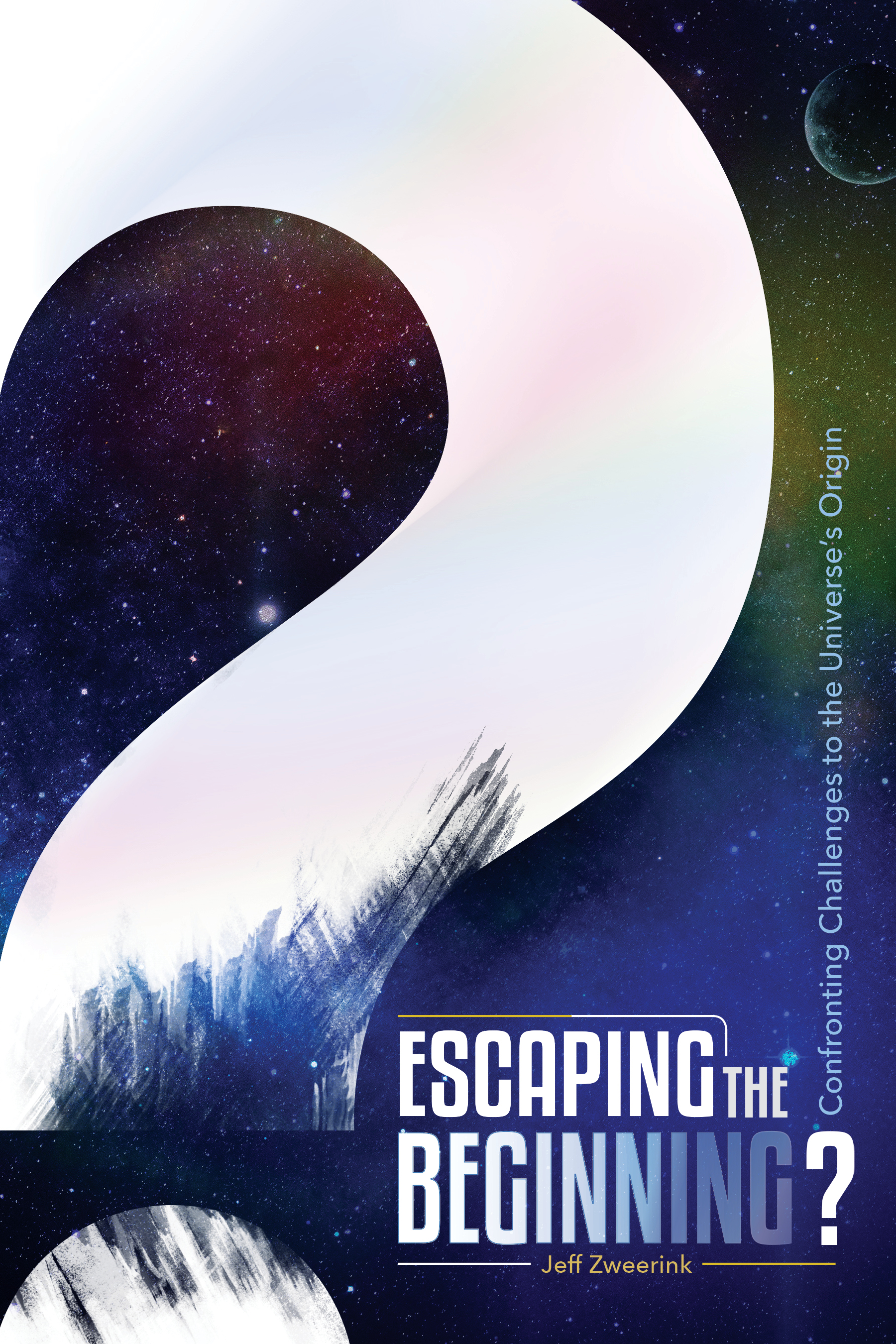
Book Review - Escaping the Beginning


I recently finished reading the new book, Escaping the Beginning?, by Jeff Zweerink, and found it to be a very good overview of the state of modern cosmology.  More importantly, it delves into the philosophical underpinnings and possible motivations behind theoretical models concerning the origin of our universe.  Zweerink is a high-energy research physicist and also a research scholar and speaker for the science-faith thinktank, Reasons to Believe, so he is highly qualified to tackle the philosophical, scientific, and religious questions raised about whether or not the universe had an actual beginning, and the implications thereof.  He is also the author of another interesting book, Who's Afraid of the Multiverse?


As someone with a physics background, I appreciated the discussion of the various cosmological models developed over the last couple of centuries.  While some of the information may stretch the non-technical reader, the author is able to clearly articulate and summarize the findings, and then address the implications for a beginning.  Some of the topics covered include: the various kinds of Multiverse theories, definitions of time, the size and curvature of the universe, quantum gravity theories, string theory,  and a universe from "nothing".   Throughout the book, the various philosophical motivations and religious implications are considered.  For instance, he shows that Multiverse theories were not developed simply to avoid a beginning, but rather have a sound theoretical basis, even it they are not necessarily verifiable. However, he does point out that there are philosophical and religious reasons that these proposals have been embraced or rejected by some. 


While I understand that it is a mentally hard topic, I found the section on how we define time to be interesting, even if it  just scratched the surface of the subject matter.  The concept of time is fundamental to understanding causality and basic laws of physics, such as the 2nd Law of Thermodynamics (entropy).  While we can write physics equations using a time parameter (say t), letting us vary the values corresponding to the past and future, does that describe what is really happening as our perception of time moves forward?  It bends the mind to think that General Relativity actually ties time and space together as separate dimensions of a unified whole.  Given various theories of time, one wonders "Does the past, present, and future actually exist or is the past gone and future events not here yet?" or "Why does time only move forward, or is this just an illusion?"  The book considers questions like this and even the implications of the various theories on the meaning of a beginning.


Ultimately Zweerink concludes that it appears that the best theoretical models and experimental observations lean toward a universe (or Multiverse) with an actual beginning, compatible with the biblical claim that the universe had a beginning and a Beginner.  While there are several theoretical models that could possibly be interpreted as having no beginning, any experimental validation of these is either far beyond our current scientific capabilities, or may even be untestable in principle.  He concludes, "That remains a reasonable and defensible position today, and my bet is that quantum gravity approaches will ultimately reveal evidence for a universe with a genuine beginning."  So, at least for the foreseeable future, there is no sure escape from the Beginning! 


Sunday, June 30, 2019

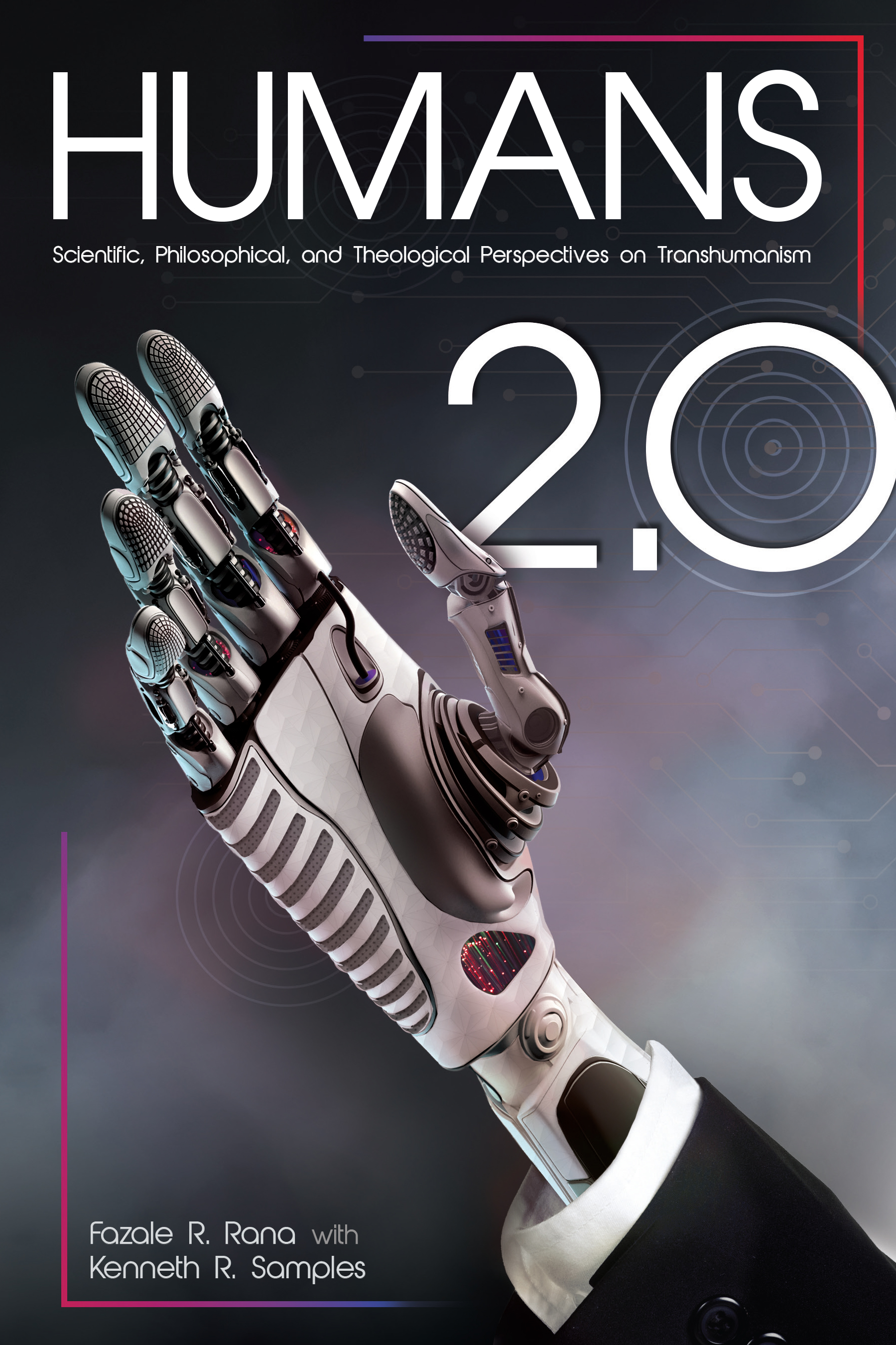
Book Review - Humans 2.0


I found Humans 2.0 to be a compelling survey of the recent advancements in technologies that have the potential to redefine who we are as human beings.  While the technical details were fascinating, I found the discussions of the moral "oughtness" to be an important part of the book.  In other words, just because we can, should we?  The authors bring together their expertise and experiences from years of interactions with scientists in a variety of fields via their association with the science-faith think tank, Reasons to Believe.  Fazale "Fuz" Rana has a background in biochemistry and biophysics, while Ken Samples is a prolific author and speaker on philosophy and religion.  Together they have provided thought provoking insights into the coming transhumanism revolution and its potential to impact each of us.


While weaving in examples using the superheroes we grew up with, such as Iron Man, the book covers advances like human gene editing, brain-machine interfaces (BMI), artificial intelligence (AI), extension of lifespans, and the ethical and moral implications of these new technologies.  The potential for great advances in improving the human condition is undeniable.  However, as Spiderman's uncle stated, "With great power comes great responsibility".  This book suggests that questions need to be asked, like: "Will we lose control?" or "Will it be used for evil or even personal, selfish gain?"   Also, it raises questions about who gets access to the benefits, and whether or not it would be equitable and just.  This book got me wondering if technology can save us and open a path to a utopia like the transhumanists envision, or will human nature corrupt the potential and bring about more evil and suffering.


The authors give detail on the various emerging biotechs and provide commentary on some of the promises and dangers.  For example, these are a few of the topics discussed.  Direct gene editing through the CRISPR-Cas9 has the potential to correct genetic defects or improve the genome, but there are questions about the long-term effectiveness and/or consequences to future generations.  Brain-machine interfaces hold great promise to help people with neuro-muscular issues, including paralysis and stroke victims, to function better, but there is also a danger of techno-dependency or even loss of what it actually means to be human, if misused.  There is optimism that we can potentially extend our lifespans, or even postpone death indefinitely, but what would the consequences be to our society and future generations.  We already have forms of artificial intelligence, but would more advanced AIs be like us, be our saviors/mentors, or could they even replace us?  


The authors discuss at length the therapeutic use of these technologies in contrast to their potential use for human enhancement.  They develop a moral framework by which to judge the usage of these advances, and contrast that with those derived from a strictly humanistic worldview.  They demonstrate the weaknesses of a relativistic moral framework vs. one built upon objective truths, such as those found in theism.  Ultimately one wonders whose ethics will be used and what those decisions will be based on.  Is it enough to just compare risk vs. reward?  What about unintended consequences or accidents that could affect future generations?  How about human rights vs. our duty to society and humanity as a whole?  I really liked the fact that each chapter ends with these kinds of thoughtful questions.


This quote from the book really jumped out at me. If the transhumanism vision succeeds, then "We may think we will save humanity by creating a posthuman world, but what we end up saving won’t be us".  I wonder if this truly would be a world that we should strive for.  My big takeaway is, "Not only can we, but should we?"  As a Christian who has been involved in science apologetics for many years, I found this book helpful as a step forward in our conversation as we engage our culture about what it means to be human. 


Sunday, March 31, 2019

Book Review - Always Be Ready


I recently received an advanced copy of the new Reasons to Believe (RTB) book, Always Be Ready, by Hugh and Kathy Ross. To my surprise, this book stands apart from other RTB books that I've read. I've been reading RTB books and materials for over 25 years, since I first discovered the Fingerprint of God while I was a young Physics grad student who was also a Christian. Over the years, the detailed scientific and theological content of these books has challenged and encouraged me, but from most of them I never really got a full picture of the heart behind the ministry. This book changes that!


Always Be Ready gives a glimpse into the life journey of Ph. D. astronomer Hugh Ross, the founder of Reasons to Believe. In the book, we see example after example of what happens when you prepare yourself and then ask God to provide opportunities. Hugh Ross clearly has a heart for ministry and evangelism, and has overcome many challenges along the way. In his own unique way, he shares how current scientific discoveries provide support for the God of creation. While this book only provides a summary of these evidences, there are many resources provided in the end notes and through the Reasons to Believe website for those interested. Through various personal accounts, Dr. Ross shares how time and time again people positively responded to the gospel message because of the evidence that he shared with them from nature and the manner in which he interacted with them.


In this book we get to see what can happen when we take both God's World and God's Word seriously. People are hungry to have answers that satisfy both their minds and their hearts. I would highly recommend this motivational book to anyone that wants to be prepared to give answers to a seeking world. Expect to be encouraged, I was.


Monday, August 13, 2018

Book Review - The Creator Revealed


In The Creator Revealed, Dr. Michael Strauss does a great job of putting the intellectual cookies on a lower shelf. Rather than talking down to his readers, or over their heads, he lays out a clear and convincing case that the facts of science and the words of scripture are compatible. He makes the case that Christians can truly love God with both their minds and their hearts, since God is the author of all truth.

He makes the case for the reality of an old universe, with a beginning of space, matter, energy, and even time from nothing! He then goes on to show how this is not only compatible with a reasonable interpretation of the Bible, but that it is also the most reasonable interpretation that fits all the facts of nature and also that of the context of the Bible as a whole. More than once, he says that the truth revealed in nature can impact people.

Dr. Strauss gives three main reasons for believing that God used the Big Bang as His method of creation.
  1. The Big Bang reveals the character of God.
  2. The Bible's account of origins aligns with our best understanding of science.
  3. Truth always brings Freedom & Freedom changes people's lives!
Some of the evidence for the Big Bang presented includes:
  • the observed expansion, which implies a beginning
  • the uniform cosmic microwave background radiation
  • the abundance of light elements in the universe fits the expectations of scientific models
  • the mathematics of General Relativity reliably describes the past and future behavior of the universe
The "hard" sciences of physics, astronomy, geology, and chemistry unanimously point unambiguously to an ancient world and universe.

In a section on fine-tuning for life, especially intelligent life, he covers several topics such as how the balanced nature of matter and energy (both normal and dark) resulted in a livable universe. He also touches on the tuning of various forces and resonances in nature that resulted in the right combination of elements for carbon-based life to thrive. Now could these all be "happy coincidences", or could there be meaning and purpose behind the design? He argues that, "Yes", there is purpose and meaning because it was orchestrated by a transcendent, super-intellect, who cares about His creation.

An important section of the book is where he discussed some of the errors of the past that the Christian church has made, and in many ways, is repeating today. In the Galileo conflict, the Church leaders failed because they clung to narrow interpretations of scripture and rejected multiple other reasonable alternatives held by other Godly believers. They failed to follow sound rules of interpretation, including those of context, perspective, language, author's intent, and culture, to name a few. In the same way, many in the Church today hold to narrow interpretations of the creation accounts that not only contradict God's natural revelation, but also the context of the Bible as a whole and the character of God. He believes that we should not rigidly hold to scriptural interpretations that other Bible-believing Christians, who faithfully hold to the authority and special nature of God's Word, reject or give different weight to. Christians should be very careful to handle truth well and to not repeat unsubstantiated, and many times false, claims about the natural world or the scientists who honestly study it. In this light, Dr. Strauss rightly points out that Young Earth Creationism (YEC) is not an option when discussing the natural world with non-believers.

I do, however, have one major disagreement with Dr. Strauss. On page 45, he states that "real Star Trek fans" prefer to be called "Trekkers" and not "Trekkies"! As I sit here typing this review, wearing my Star Trek shirt that says "I was a Trekkie… Before it was Cool… Not to Mention, Before You Were Born!", I have to admit that it has always bugged me to hear the term "Trekker" instead of "Trekkie". "Trekker" just sounds ridiculous! I will always be a "Trekkie" -- and proud of it! 

Anyway, great book. I highly recommend it to anyone interested in science/faith issues. In particular, I encourage Christians who may not be technically inclined to pick up a cookie from the shelf and take a small bite. I'm confident that you'll come away with a better understanding of the evidence for an old, big bang, creation that fits with the Bible's description of it.