Sunday, June 30, 2019

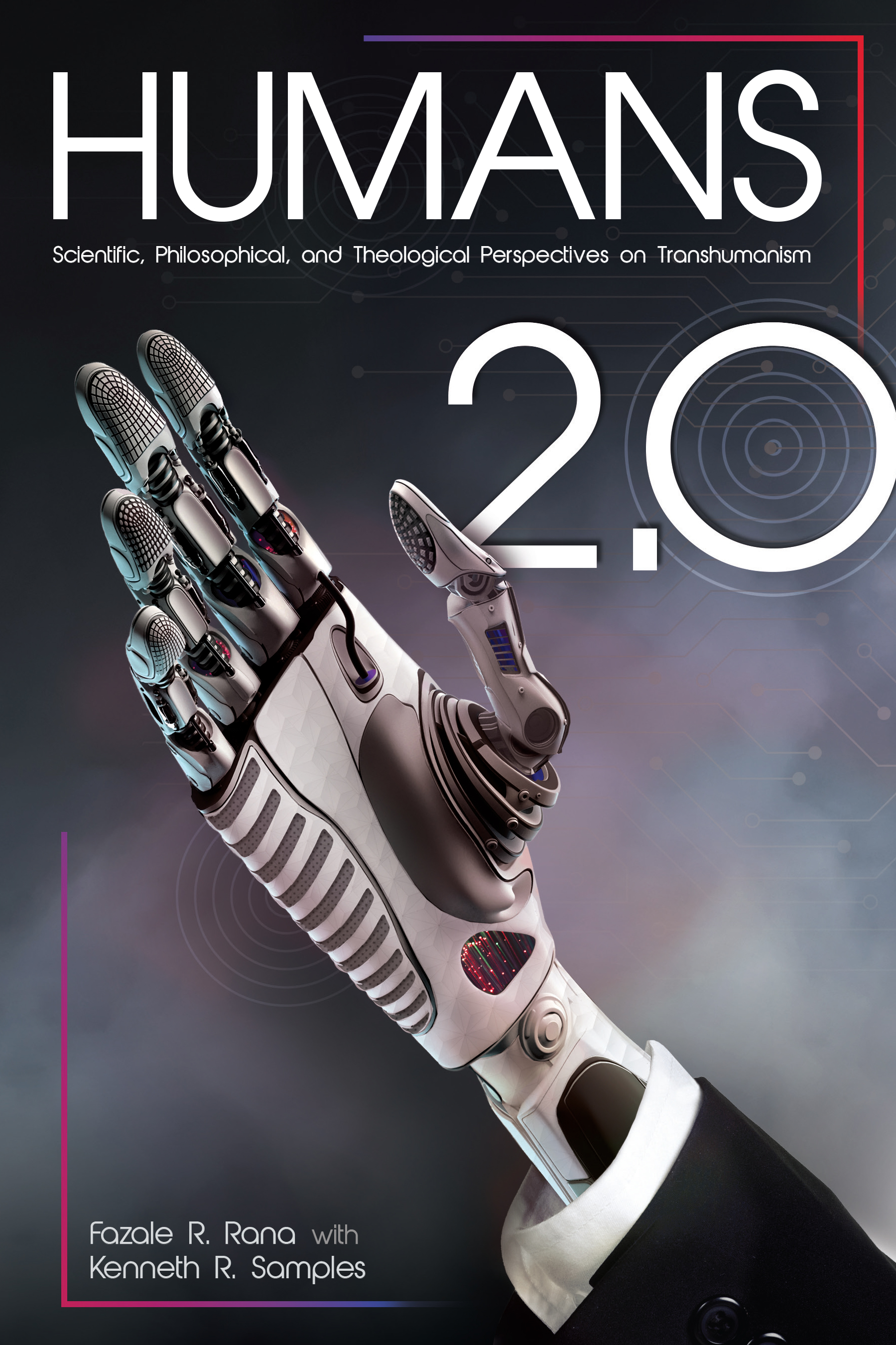
Book Review - Humans 2.0


I found Humans 2.0 to be a compelling survey of the recent advancements in technologies that have the potential to redefine who we are as human beings.  While the technical details were fascinating, I found the discussions of the moral "oughtness" to be an important part of the book.  In other words, just because we can, should we?  The authors bring together their expertise and experiences from years of interactions with scientists in a variety of fields via their association with the science-faith think tank, Reasons to Believe.  Fazale "Fuz" Rana has a background in biochemistry and biophysics, while Ken Samples is a prolific author and speaker on philosophy and religion.  Together they have provided thought provoking insights into the coming transhumanism revolution and its potential to impact each of us.


While weaving in examples using the superheroes we grew up with, such as Iron Man, the book covers advances like human gene editing, brain-machine interfaces (BMI), artificial intelligence (AI), extension of lifespans, and the ethical and moral implications of these new technologies.  The potential for great advances in improving the human condition is undeniable.  However, as Spiderman's uncle stated, "With great power comes great responsibility".  This book suggests that questions need to be asked, like: "Will we lose control?" or "Will it be used for evil or even personal, selfish gain?"   Also, it raises questions about who gets access to the benefits, and whether or not it would be equitable and just.  This book got me wondering if technology can save us and open a path to a utopia like the transhumanists envision, or will human nature corrupt the potential and bring about more evil and suffering.


The authors give detail on the various emerging biotechs and provide commentary on some of the promises and dangers.  For example, these are a few of the topics discussed.  Direct gene editing through the CRISPR-Cas9 has the potential to correct genetic defects or improve the genome, but there are questions about the long-term effectiveness and/or consequences to future generations.  Brain-machine interfaces hold great promise to help people with neuro-muscular issues, including paralysis and stroke victims, to function better, but there is also a danger of techno-dependency or even loss of what it actually means to be human, if misused.  There is optimism that we can potentially extend our lifespans, or even postpone death indefinitely, but what would the consequences be to our society and future generations.  We already have forms of artificial intelligence, but would more advanced AIs be like us, be our saviors/mentors, or could they even replace us?  


The authors discuss at length the therapeutic use of these technologies in contrast to their potential use for human enhancement.  They develop a moral framework by which to judge the usage of these advances, and contrast that with those derived from a strictly humanistic worldview.  They demonstrate the weaknesses of a relativistic moral framework vs. one built upon objective truths, such as those found in theism.  Ultimately one wonders whose ethics will be used and what those decisions will be based on.  Is it enough to just compare risk vs. reward?  What about unintended consequences or accidents that could affect future generations?  How about human rights vs. our duty to society and humanity as a whole?  I really liked the fact that each chapter ends with these kinds of thoughtful questions.


This quote from the book really jumped out at me. If the transhumanism vision succeeds, then "We may think we will save humanity by creating a posthuman world, but what we end up saving won’t be us".  I wonder if this truly would be a world that we should strive for.  My big takeaway is, "Not only can we, but should we?"  As a Christian who has been involved in science apologetics for many years, I found this book helpful as a step forward in our conversation as we engage our culture about what it means to be human. 
 

Sunday, March 31, 2019

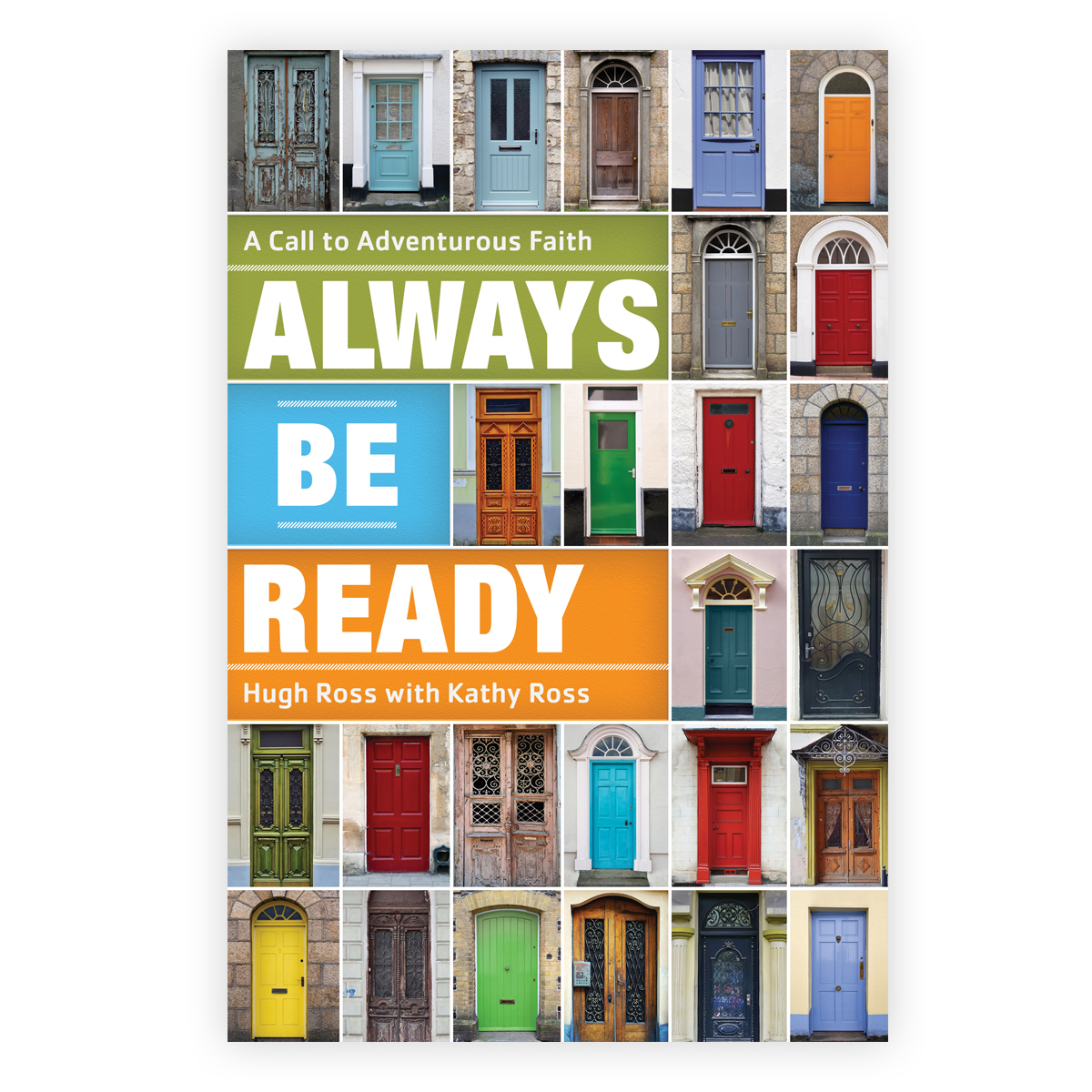
Book Review - Always Be Ready


I recently received an advanced copy of the new Reasons to Believe (RTB) book, Always Be Ready, by Hugh and Kathy Ross. To my surprise, this book stands apart from other RTB books that I've read. I've been reading RTB books and materials for over 25 years, since I first discovered the Fingerprint of God while I was a young Physics grad student who was also a Christian. Over the years, the detailed scientific and theological content of these books has challenged and encouraged me, but from most of them I never really got a full picture of the heart behind the ministry. This book changes that!


Always Be Ready gives a glimpse into the life journey of Ph. D. astronomer Hugh Ross, the founder of Reasons to Believe. In the book, we see example after example of what happens when you prepare yourself and then ask God to provide opportunities. Hugh Ross clearly has a heart for ministry and evangelism, and has overcome many challenges along the way. In his own unique way, he shares how current scientific discoveries provide support for the God of creation. While this book only provides a summary of these evidences, there are many resources provided in the end notes and through the Reasons to Believe website for those interested. Through various personal accounts, Dr. Ross shares how time and time again people positively responded to the gospel message because of the evidence that he shared with them from nature and the manner in which he interacted with them.


In this book we get to see what can happen when we take both God's World and God's Word seriously. People are hungry to have answers that satisfy both their minds and their hearts. I would highly recommend this motivational book to anyone that wants to be prepared to give answers to a seeking world. Expect to be encouraged, I was.


Monday, August 13, 2018

Book Review - The Creator Revealed


In The Creator Revealed, Dr. Michael Strauss does a great job of putting the intellectual cookies on a lower shelf. Rather than talking down to his readers, or over their heads, he lays out a clear and convincing case that the facts of science and the words of scripture are compatible. He makes the case that Christians can truly love God with both their minds and their hearts, since God is the author of all truth.

He makes the case for the reality of an old universe, with a beginning of space, matter, energy, and even time from nothing! He then goes on to show how this is not only compatible with a reasonable interpretation of the Bible, but that it is also the most reasonable interpretation that fits all the facts of nature and also that of the context of the Bible as a whole. More than once, he says that the truth revealed in nature can impact people.

Dr. Strauss gives three main reasons for believing that God used the Big Bang as His method of creation.
  1. The Big Bang reveals the character of God.
  2. The Bible's account of origins aligns with our best understanding of science.
  3. Truth always brings Freedom & Freedom changes people's lives!
Some of the evidence for the Big Bang presented includes:
  • the observed expansion, which implies a beginning
  • the uniform cosmic microwave background radiation
  • the abundance of light elements in the universe fits the expectations of scientific models
  • the mathematics of General Relativity reliably describes the past and future behavior of the universe
The "hard" sciences of physics, astronomy, geology, and chemistry unanimously point unambiguously to an ancient world and universe.

In a section on fine-tuning for life, especially intelligent life, he covers several topics such as how the balanced nature of matter and energy (both normal and dark) resulted in a livable universe. He also touches on the tuning of various forces and resonances in nature that resulted in the right combination of elements for carbon-based life to thrive. Now could these all be "happy coincidences", or could there be meaning and purpose behind the design? He argues that, "Yes", there is purpose and meaning because it was orchestrated by a transcendent, super-intellect, who cares about His creation.

An important section of the book is where he discussed some of the errors of the past that the Christian church has made, and in many ways, is repeating today. In the Galileo conflict, the Church leaders failed because they clung to narrow interpretations of scripture and rejected multiple other reasonable alternatives held by other Godly believers. They failed to follow sound rules of interpretation, including those of context, perspective, language, author's intent, and culture, to name a few. In the same way, many in the Church today hold to narrow interpretations of the creation accounts that not only contradict God's natural revelation, but also the context of the Bible as a whole and the character of God. He believes that we should not rigidly hold to scriptural interpretations that other Bible-believing Christians, who faithfully hold to the authority and special nature of God's Word, reject or give different weight to. Christians should be very careful to handle truth well and to not repeat unsubstantiated, and many times false, claims about the natural world or the scientists who honestly study it. In this light, Dr. Strauss rightly points out that Young Earth Creationism (YEC) is not an option when discussing the natural world with non-believers.

I do, however, have one major disagreement with Dr. Strauss. On page 45, he states that "real Star Trek fans" prefer to be called "Trekkers" and not "Trekkies"! As I sit here typing this review, wearing my Star Trek shirt that says "I was a Trekkie… Before it was Cool… Not to Mention, Before You Were Born!", I have to admit that it has always bugged me to hear the term "Trekker" instead of "Trekkie". "Trekker" just sounds ridiculous! I will always be a "Trekkie" -- and proud of it! 

Anyway, great book. I highly recommend it to anyone interested in science/faith issues. In particular, I encourage Christians who may not be technically inclined to pick up a cookie from the shelf and take a small bite. I'm confident that you'll come away with a better understanding of the evidence for an old, big bang, creation that fits with the Bible's description of it.